Sunday, December 8, 2024

Music Marketing Research and Planning

 We have started working on a big project in media studies, which is half of our midterm grade. It is called Music Marketing. The first big portion of it was research. I am in a group of 4 and we all must choose an artist in a given category and study their marketing techniques. My group was given the "alternate" category. The music artist I picked was The Cure. Even though this is unrelated, they are one of my favorite bands and I saw them live in 2023, so I was excited to look into all of their marketing strategies for their 2024 album "Songs Of a Lost World". 

I was a bit lost on how to start my research, so I started with their biography. On their official website they have an "about us" tab, so I read it over and wrote the important points. I then decided to start on their non-digital marketing. After a couple of minutes of scrolling through google links, I found a blog of a marketing university professor that was praising the band for their amazing marketing. There he detailed how the band sent their fans secret "black cards", among other things. I obviously cannot just trust a random blog off the internet so I went item by item to verify that they actually happened. I went through several online articles and fan blogs to gather all of my examples of non-digital marketing. The digital marketing portion was easier as all of their social medias, websites, and streaming platforms are super accessible. I just scrolled through most of their social medias and wrote my important points. I did have to do some extra research for their "secret" website and WhatsApp channel, since the website is no longer available and you have to subscribe to the channel. Finally, I worked on the band identity last, since I had just researched all of their marketing strategies. 

Overall, I honestly learned a lot about marketing and how much it can impact fans and artists alike. 


I have attached my portion of the project below: 

Brief history 


(Include information on group formation, artist background and other information pertinent to brand development) 

Target Audience/Brand Identity 


(Describe the target audience of the artist/band.  Describe the brand identity) 

Digital Marketing and Distribution 


 (Explain how the artist/band uses marketing and distribution techniques and platforms.  Provide links or images of examples) 

Non-digital Marketing and Distribution 


(Focus on how the artist/band uses non-digital practices to market and distribute)  


The Cure is an English band formed in 1976 in Crawley, West Sussex. The original band name was “Easy Cure” and it consisted of Robert Smith (vocals/guitar), Micheal Dempsey (bass), Lol Tholhurst (drums), and Porl Thimpson (guitar). Later in 1978 the band dropped “easy”, and Porl Thimpson. And the trio signed to Chris Parry’s “Fiction” label. 

In May of 1979 their debut album “Three Imaginary Boys” was released.  

They now have fourteen studio albums, six live albums, two remix albums, and seven compilation albums. 

The band is known for constantly rotating its members, all for vocalist Robert Smith. 

Lovesong: The Cure Tribute Tickets, 2024-2025 Concert Tour Dates |  Ticketmaster 

The Cure (2024) 


Target Audience:  

The Cure's target audience spans throughout multiple generations, from the younger audiences that are attracted to the timeless feel of their music, as well as original-older fans from the 1980s, who resonate with their post-punk and gothic rock sound. Their target audience are people who tend to appreciate their reflective lyrics and unique visuals. People who frequently connect with themes of romance, individualism, and melancholy. The Cure's unique aesthetic has influenced pop culture, as they were inspiring to other alternative bands in the 1980s, and to many artists and filmmakers in the present day.  


Brand identity: 

One thing that is clear about The Cures brand identity is that they are for the fans. When they started selling tickets for their 2023 tour, fans brought attention to the high maintenance fees Ticketmaster was placing (the maintenance fees were more expensive than the concert ticket itself). Robert Smith (lead vocalist) publicly criticized Ticketmaster online for implementing these high service fees that were significantly increasing the ticket costs for fans. The band has always tried to keep ticket prices affordable, so they opted out of dynamic pricing and came to an agreement with Ticketmaster to not charge the service fee. They successfully kept prices low to ensure accessibility for everyone. 

The Cure's unique goth and alternative aesthetic defines their brand identity. They are known for both their ability to balance self-reflection as well as having a distinctive visual presence, like Robert Smith's signature stage style. The band is a symbol of sincerity, creative depth, and a dedication to music that appeals to listeners both young and old. 


Website:  

https://www.thecure.com/ 

The entire website is currently branded towards the new album. The color palette matches the album color and as you scroll you are shown al the new website merch available for “Songs of a Lost World”. 


 They also live stream performances from the band through their website. Moreover, there is a “news” tab where fans can stay updated with all “The Cure” related news.  


“Secret” Website: 

For the release of the new album, The Cure launched a “secret” website (www.songsofalost.world) that requires a password to enter, which are the same roman numerals from the black cards. Then you’ll see possible new album artwork, and a decaying statue, with an invite to sign up to a mailing list, and an invite to join The Cure’s WhatsApp community (channel). This sense of “secrecy” adds excitement to the fans, as they all feel “special” for being let in to the big secret.  


WhatsApp Chanel:  

After joining the WhatsApp channel, fans are greeted by the lyrics: “This is the end of every song that we sing… Where did it go?” from the song “Alone”. Through this channel fans also have access to behind the scenes, important announcements, and sneak peaks. 

If you subscribe to the Cure's official WhatsApp it will start sending you  verses of Alone : r/TheCure 


Social Media:  


The Cure constantly uses social media platforms like Instagram, X, and Facebook to connect with fans. They show behind-the-scenes footage, give updates, share things related to the new album, and tour/show announcements.  


The Cures Instagram posts feature visual teasers, tour photos, and album-related images, which are all very engaging and captivating for fans. They have 1.2 million subscribers 


The band uploads content on YouTube like official lyric videos to songs, which combine music with eye catching visuals that appeal to both newer fans and longtime fans. They currently have 1.55 million subscribers. 


Their albums are available on all major streaming platforms like Spotify, easy reach for fans around the world.  


The Cure utilizes Facebook to appeal to fans through engaging posts and video content. They use Facebook to announce concerts, photos, and live stream links. They also use it to promote merchandise and ticket sales. Facebook makes it possible to maintain relevance while strengthening relationships with fans of all ages. 


​ 

Magazines 

Their new album “Songs of the Lost World” was reviewed in multiple newspapers and music related journals all around the world.  

Examples: The Guardian, Paste magazine, Rolling Stone, Variety, RIFF, the RockPit. 


Vinyl Records 

Alongside the new album they released limited edition eco-friendly vinyl's that featured live recordings and unreleased tracks. It was marketed as a collaboration with “Naked record Club” and all profits going towards climate charity Earth Percent, founded by Brian Eno. These were limited edition as only 5 thousand copies were made, and only the first 100 were signed by Robert Smith. This brings together not only vinyl collectors, but eco-friendly enthusiast.  


Easter Eggs: 

Cryptic Cards 

Select fans started receiving black cards in their mail, that when exposed to blacklight revealed roman numerals (I/XI/MMXXIV aka 1-11-2024). This caused a lot of chatter among the fans since it had been around 16 years since the last The Cure album. 


Poster 

On September 13, 2024, outside The Railway Inn in Crawley (previously named The Rocket), a gold and black poster was hung that had the same roman numerals and the album title. This was no mistake as it's where the band played their first show as The Cure in 1978. 


Thursday, October 31, 2024

Genre Research Activity

Fantasy Overview:

Fantasy is one of the most popular genres to ever exist. From book adaptations to cartoons, it has a wide variety of media that is appealing for all audiences. Fantasy is a form of fiction that typically occurs in a imaginative setting and has otherworldly elements that do not exist in the real world. Like magical powers, talking animals, and fictional universes.


Content:                                                                                                               

  • Quests
A common trope in this genre is when the main character/s have to go on a perilous quest to discover their purpose or earn honor, like defeating an evil tyrant or completing a seemingly impossible task. Quests fall into 2 categories: Internal and external. Internal quests are something the character wants, while internal quests are something the character needs for themselves.  

Example: Lord Of The Rings
The primary goal of the movie is to destroy the One Ring and bring it to Mount Doom. Since the hero begins with the treasure and has to discard it, this type of quest is referred to as a reversed quest. 


  • Chosen one: 
Another popular element of fantasy is when a character has a specific prophecy or destiny they have to fulfill. Most of the time it is defeating a greater evil to bring stability into the world, basically framing the protagonist to be the inevitable hero of the story. Sometimes the character is in denial about this and they do not want to be the saving grace of the story, but they eventually come around. There is also a high chance that they sacrifice themselves in the end to fulfill their destiny.
Example: Harry Potter Franchise 
In order to stop the prophecy, Voldemort attempted to killed Harry Potter and his family, which selected him as the chosen one to one day defeat Voldemort. He goes on perilous journeys and ultimately sacrifices himself for his community but resurrects. 


  • Magical elements:
A key component of fantasy is magic. This incudes wizards, special powers, witches, spells, enchanted objects, and magical creatures. Magic emphasizes how the fantasy genre is something that could never happen in the real world. 

Example: The Chronicles Of Narnia 
Narnia includes things like talking animals, mythical creatures (dwarves, unicorns, giants), witches, magical objects (the closet)


Production Techniques: 

In order to make the story fully immersive, productions have to be very detailed. The story they are presenting is totally different from the real world and they want the audience to feel disconnected too, as if they are escaping into another universe. Visual and special effects like computer-generated imagery (CGI) are among one of the most essential techniques used to bring supernatural elements and magical creatures to life. Makeup and costume design are equally as important. They can transform actors into whimsical creatures like trolls, wizards, and anything else imaginable. With unique sets and props that are all specific to their production, production designers help bring these fantastical worlds to life. Lighting and cinematography help contribute to these sets. The magical atmosphere is also enhanced by musical scores, that help make character distinct, scenes emotional, and unique sound effects for particular objects. Fantasy stories are able to draw in viewers successfully because of all the different techniques incorporated into their productions. 


Samples:

The Wizard of Oz is an MGM classic. Its about a Kansas farm girl named Dorothy, who dreams about living "somewhere over the rainbow". But when a tornado suddenly rips through their home, Dorothy and her dog Toto are transported to the bright and magical world of Oz. To find her way home Dorothy is told she has to follow the yellow brick road that will lead her to Emerald City, where she can get help from the Wizard of Oz. Throughout her journey she makes friends with the Tin Man, the Cowardly Lion, and the Scarecrow, which are all looking looking for something they don't have. They face different challenges and an ultimate confrontation. Its mystic setting, creative characters, and original storyline make it a fantasy film. There are a number of incredibly detailed sets in this movie that blend in perfectly with the storyline. The different atmospheres are contrasted even further by the change from black and white Kansas to Technicolor Oz. The film incorporated elaborate soundstages with different light setups and backgrounds that were matte paintings (since greenscreen didn't exist back then). This made the film so much more immersive. Its magical character such as the Tin Man, the talking Scarecrow, the Cowardly Lion, and witches had to undergo extensive costuming, like wearing wigs, painting their bodies, and have lots of makeup done. The film has magical elements like Dorothy's ruby slippers, the magical tornado, munchkins, flying monkeys and more.
Wizard of Oz (1939)


Maleficent is the reimagined story of Sleeping Beauty from the point of view of Maleficent, who is a powerful fairy that was betrayed by a human king. As revenge she curses his daughter to fall into eternal sleep when she turns 16 years old. But as Maleficent sees princess Aurora grow up, she begins to feel affection and fondness for her. She realizes she needs to break the curse in order to maintain the peace in the lands. The use of magic curses, whimsical characters, and enchanting images make it a fantasy movie. With the help of CGI, the film's detailed fictional land of Moors comes to life, filled with mythical animals and vibrant scenery that contrast with the gloominess of the human land. Maleficent' s intimidating presence is enhanced by elaborate makeup and costuming, such as her famous horns and black robes, while dramatic lighting and a powerful musical score create an mysterious, ethereal atmosphere that draws in viewers.

Maleficent (2014)


Other fantasy movies worth mentioning:

The Hobbit (2012)

Willy Wonka (1971)

Avatar (2009)

Fantastic Beasts and Where to Find Them (2016)


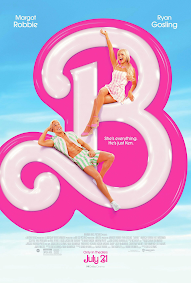
Barbie (2024)

Friday, October 18, 2024

Representation

 TV show I chose: Young Sheldon 


Young Sheldon is a spinoff to the popular sitcom called "The Big Bang Theory". This spinoff is about Sheldon's Coopers childhood and growing up in Texas during the 1980s as a child prodigy. 

The show definitely has some impacts, for example creator bias. The creators of "Young Sheldon" wanted the story to align with the pre existing lore from "Big Bang Theory", so certain parts of the the storyline were already defined. They also wanted to expand the target audience so they made the show family friendly. Although it is still a sit com it is not filmed with a live audience or multi camera set up but instead in a single camera movie style, giving it a more cinematic feel. 

The characters in this series are represented in their own way. For example, Sheldon Cooper, the main character, is shown as the smart nerd who can be selfish sometimes and always wants to outsmart others around him. This is shown through costume design, Sheldon is usually shown wearing plaid button up with bowties in all 7 seasons, which is very stereotypical style for a "nerd". He also has specific mannerisms. He speaks very formally with a high vocabulary level, with rarely any slang. His sentences' are precise and get to his point. He has a hard time understanding figurative language, often taking literally what others say. This makes his character seem clueless about social skills and introverted, which again are "nerdy".  Sheldon is also characterized by always having a strict routine. He is visibly uncomfortable when things don't go his way or the way he had it planned, which is also reflected in his character in "Big bang Theory". Sheldon also has many different obsessions like scientists, trains, technology, and comics which he brings up constantly during the series. They play a huge role in his character and personality. Through all of these different techniques, "Young Sheldon" represents Sheldon as the smart nerdy pushover.


Another great example of a character in this show that is represented in various ways is Sheldon's mother, Mary Cooper. She is the humanized version of a typical southern mother. She has a very conservative style, typically wearing a knee length dress. She always has her hair back and looks modest. Mary rarely uses many accessories or heavy makeup. She speaks very formally, in a calm and composed matter. She is really patient, especially with Sheldon and the families needs. She is the main anchor of the Cooper family, keeping everyone in check. Her character is depicted as a stereotypical mother in charge of everyone and at home and  the one with the most responsibilities. She cooks all the meals in the home and is seemingly the strictest to her children. Mary is also a traditional person. She is a very religious Christian that goes to church every Sunday and always brings up biblical stories. Her character is often praying in times of need or help. She refuses to partake in any activities that go against her religious beliefs like dancing, gossiping and cursing.


By using different techniques like costume design, dialogue, and character mannerisms, and stereotypes you can successfully represent different characters any way you want.

Thursday, October 10, 2024

Soundscape Project

 Last week in Media Studies, we started to learn all about sound. We looked at different types of sound techniques and how they are used in media. We also studied the art of foley. I never realized how big of a part sound plays in film, and how much it affects the viewing process. I'm grateful that we got to go into detail about it. We also learned about "Shepard tones", and its so impressive that by using layered octaves we can trick the brain into a "never ending" rise effect.

We followed up this lesson with a new project, the soundscape project. We had to tell a story using only sound effects and foley. It had to be 1-2 minutes long, and we needed to make at least 4 foley sounds for it. 
We got assigned into pairs and we got straight to work. We needed to first complete a brainstorming outline, detailing all of our scenes and the sound we would use in each one.
We then started thinking about what our story would be, and we settled on a football game. We split up our scenes and started organizing our sounds and which sounds we would make ourselves.
Our outline was really useful to me in the editing process because it reminded me of what sound effects i wanted in each scene and the overall organization of it. My partner and I both edited on Adobe Premier Pro.

Overall, I think we did a good job finding good sound effects and creating foley. But I think we could've created a better story, I ended up feeling like our project was generic and underwhelming. We also could have had a stronger start in the project editing wise.

Link to view project: Soundscape.MOV

Monday, September 30, 2024

One Word Film


Our first official video assignment was assigned to us a few days ago. It is called the "one word film". In pairs, we were given a single word, and we had to make a one minute to a minute and a half film representing that word in a story. We had to incorporate camera and editing techniques we learned in class. We couldn't use any dialogue, only instrumental music. My partner and I were assigned the word "hateful".

Our first phase of the project was to brainstorm. We started discussing characters, settings, and tone. After thinking of a story we created a shot list and a story board to help the visualization.


The story board was very useful. It helped my partner and I to be on the same page, and to make sure we were visualizing the same thing. It was also vital to the organization and post production process. We ended up tweaking and changing the final product from the storyboard, but it was useful regardless. We utilized Adobe Premier Pro for the editing process.

Overall, for a first video assignment I think we did pretty well. I enjoyed the quality of our footage and editing. We struggled to create a story that reflected "hateful"  but in the end we had a strong storyline. I think for next time we can focus on the continuity of our story, and have better cinematography. 

OWF project:

Tuesday, September 3, 2024

Camera Shots/Angles Quiz


Last week in AICE media studies, in pairs we worked on our camera shots and angles quiz. It consists of telling a story through 15 pictures using the shots and angles we were taught previously in class. We had to use inanimate objects to help develop the visual story. And include 10 specific shots, but had the freedom to choose the other 5. The goal of this project is to show our full understanding of different types of shots and angles.

I approached the assignment by brainstorming different story ideas, something short and  simple since we only had 15 pictures. We decided on a kind of "long lost lovers", I suddenly envisioned a white eraser going through a perilous journey to reunite with its lover, a pink eraser. After coming up with this we thought of a main story line, the challenges the eraser would face before reuniting with its lover. We then decided the setting of the story, and that we had to incorporate dangerous challenges for the white eraser to encounter before reuniting with pink eraser. This included having to fly a paper airplane, encounters with a dog, and having to fight stapler guards. After, we made the choice to add little papers with faces on the erasers to know what emotion the erasers are feeling in every picture. This was a great help for the story-telling. Finally we created a shot list for organization.

I think we did a good job figuring out our story and assigning shots/angles to each picture. For the restraints and expectations we needed to meet we did a pretty good job of keeping the story fluid. We knew what we wanted each face, and scene to look like. We definitely struggled on time management. The original plan was to shoot in the classroom but due to timing we did it in a living room. We also struggled a little with getting our shots as good as we wanted, also taking up valuable time.


Critical Reflection

When coming up with ideas for our short film Sprouting, my team and I really wanted to create something that represented us and the point of...